
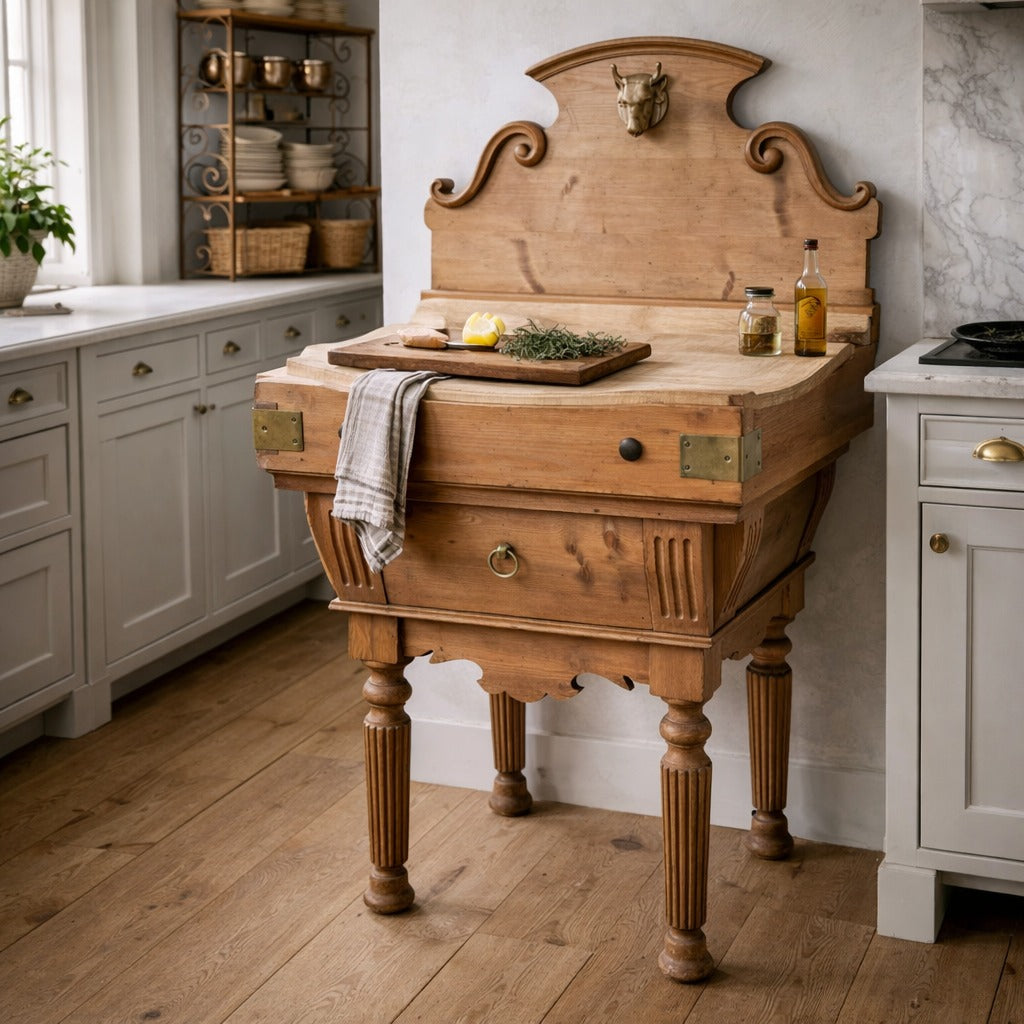
Antique French Industrial & Work Tables
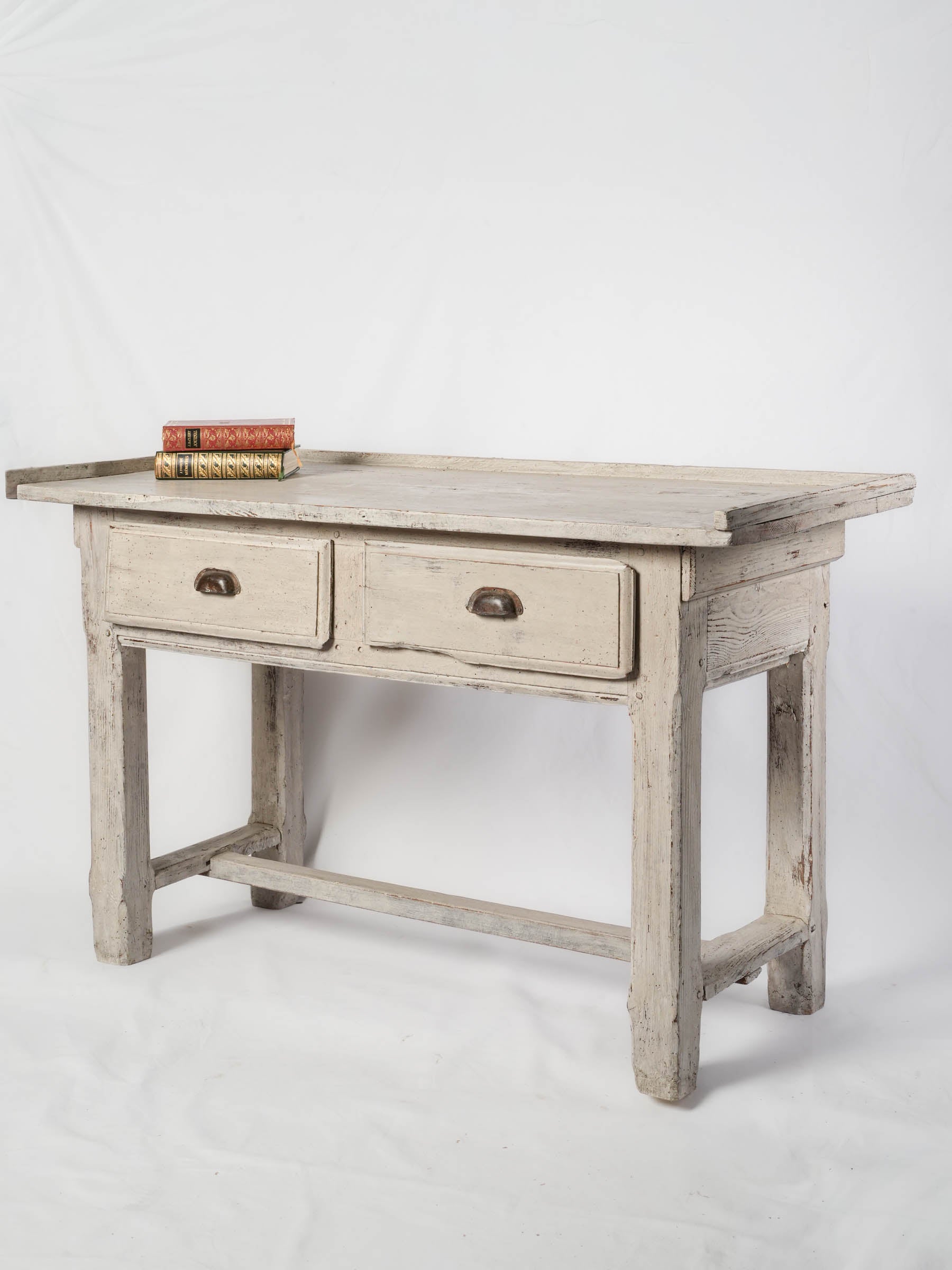
Antique French work tables and industrial furniture bring scale, material depth, and a working history to kitchens, dining rooms, and informal living spaces where the character of a room is built from use rather than ornament.
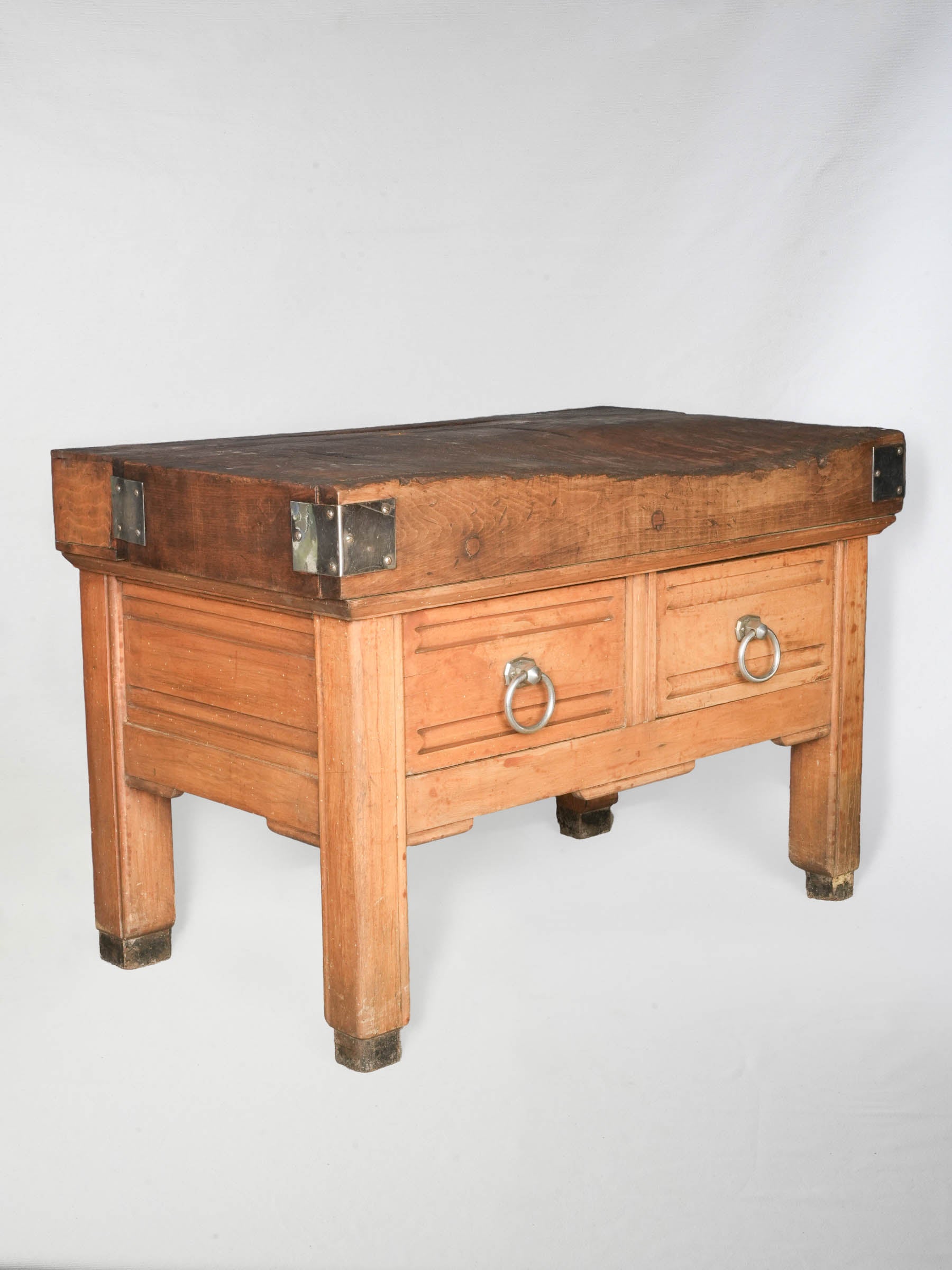
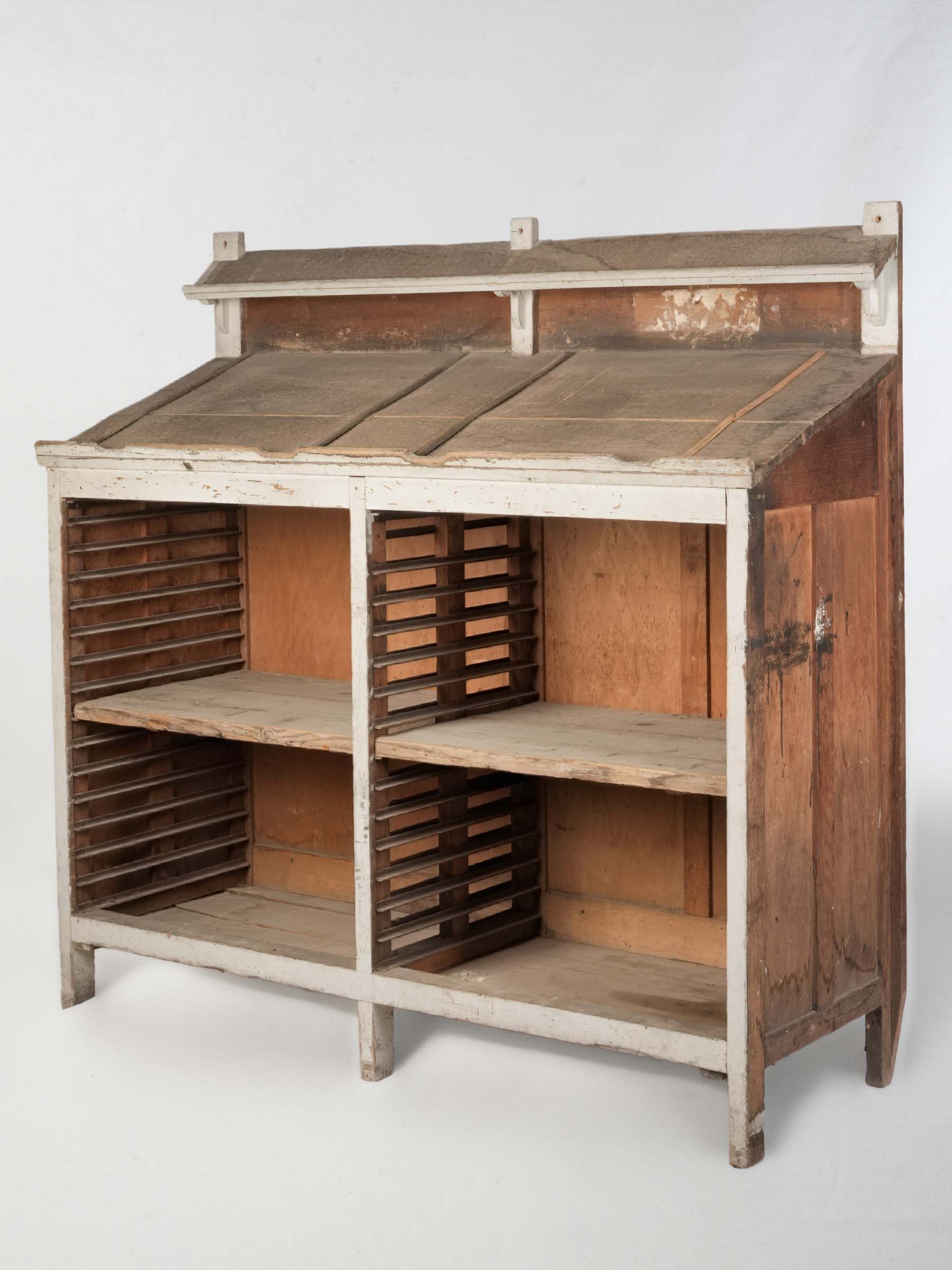
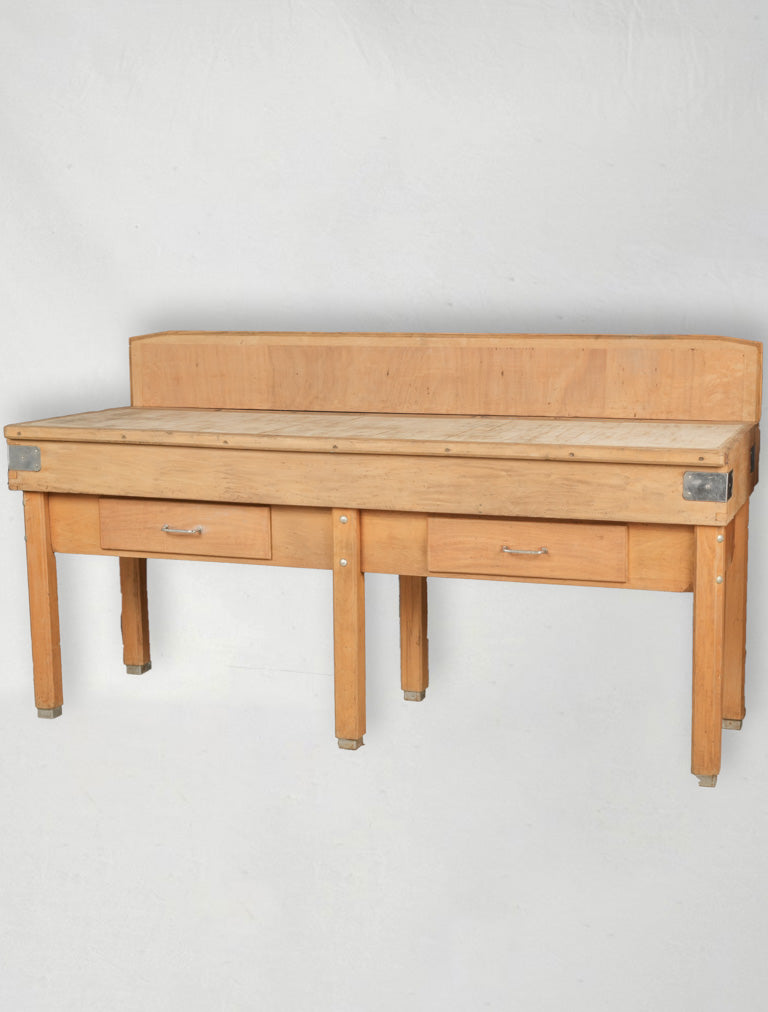
French tradespeople and craftsmen built their working furniture to exacting standards, because the alternative was a surface that failed under daily professional demands. The butcher's table, the workshop bench, and the meuble de métier were not designed with longevity in mind as an aspiration; longevity was simply the consequence of building something properly in the first place. Oak was chosen for its density and resistance to impact, marble for its cool, impermeable surface suited to meat preparation, and cast iron for the structural rigidity that wooden bases could not always provide at the scale required. What these pieces share is an absence of compromise, and it is precisely that quality that makes them so adaptable when removed from their original context and placed in a contemporary home.
A butcher's block used as a kitchen island sits naturally with antique pottery displayed at one end, where worn oak and glazed terracotta create an environment that a conventionally furnished kitchen takes decades to accumulate. A meuble de métier in a study offers storage built for hundreds of daily openings, which means it will outlast almost any purpose-built alternative. For informal dining rooms, a butcher's station anchors the room naturally and pairs well with antique dining chairs pulled up for everyday use.
Each piece is carefully measured, clearly documented, and professionally photographed, with condition noted. Stock availability is maintained in real time. All items ship directly from France and are packed using methods developed for transporting large and heavy antique furniture.
ALL USA IMPORT DUTIES & TARIFFS INCLUDED IN PRICES
FREE SHIPPING TO USA, CANADA AND EUROPE
PROFESSIONALLY PACKAGED BY OUR TEAM IN PROVENCE